
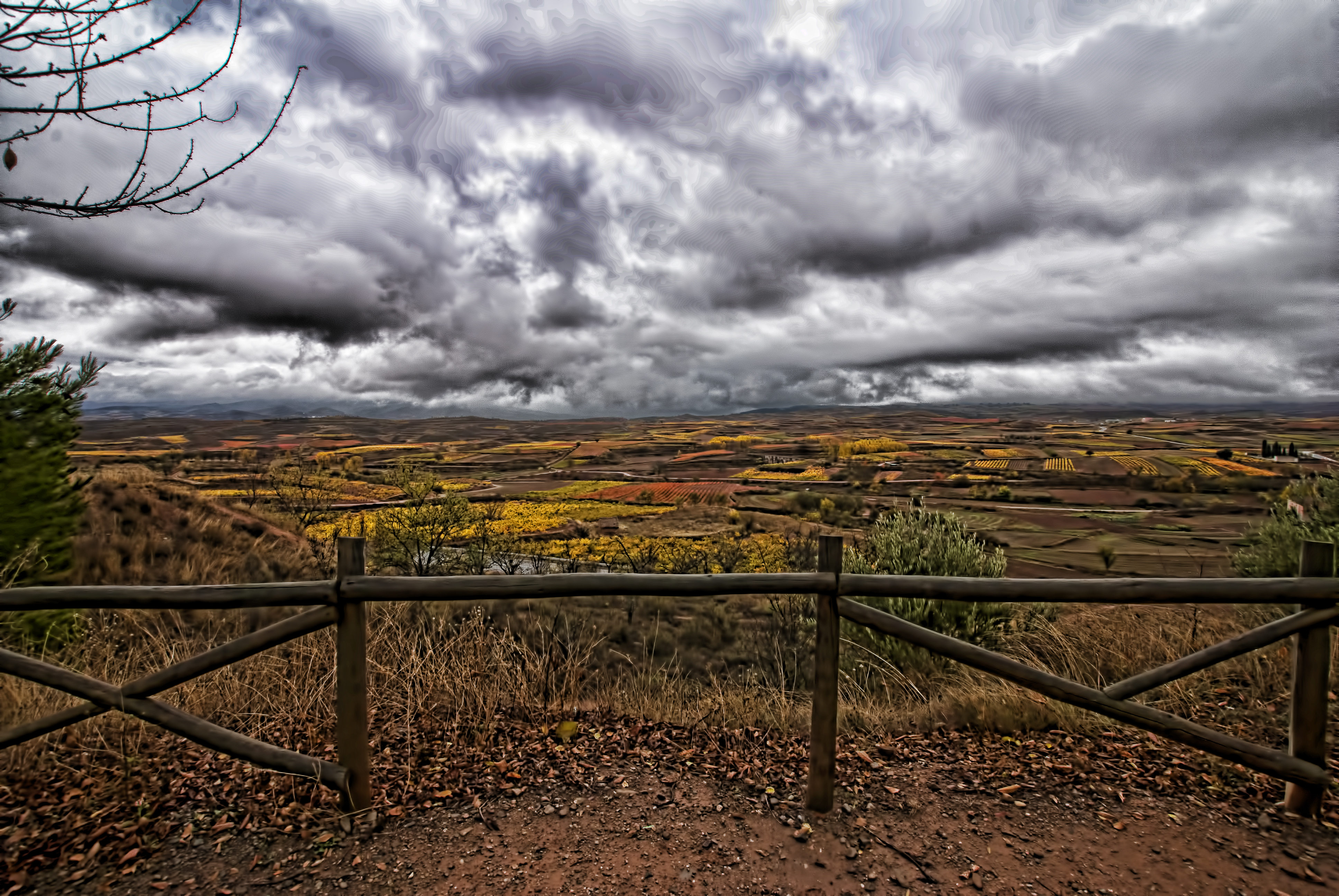
Painting La Rioja, by Jesus Solana
Best Bargain in Europe
Luckily for us in the U S of A, Spanish wine is also insanely underpriced for the quality you get. Why?
1. France and Italy are wine-making divas who hog the spotlight and have the power to charge more for their time-tested name-brand.
- How many of you have heard of France’s Champagne? or Italy’s Pinot Grigio? (Probably everyone)
- How about Spain’s Albariño? (I’d guess not too many, although it’s actually one of the most famous wines in Spain)
- So you’re going to spend the same amount on a subpar Italian Pinot Grigio as you are on a decent Spanish Albariño.
2. Spain only started exporting wine fairly recently, so Americans aren’t as familiar with it.
- Spaniards traditionally drank so much wine per capita that there was none left to export.
- The military dictatorship under General Franco didn’t quite excel at free trade and investment, so until the 1990s Spain’s winemakers were still using inefficient and outdated production techniques.
3. The first Spanish wines that appeared in the U.S. were ultra-cheap (think Franzia) and did lasting PR damage.
- Fool me once shame on me…
But times have changed. Globalization and countless other forces have transformed the world, and more importantly delivered Spanish wines of all kind and quality to a grocery store near you. And that, my friends, is why Spain is a wonderful place to start your wine adventure. It’s brimming to the edges with tasty wines that you’ve probably never heard of and won’t have to spend a paycheck on to enjoy.
Grape Varieties
Spain’s grapes are extremely diverse, but I’m going to focus on the varieties most often found in wine stores and supermarkets around the US.
Red (Tinto) Varieties
Garnacha (Grenache): This popular grape is found all over the world but thrives in Spain’s dry warm Mediterranean climate, where it first originated. It’s also one of my favorites, because it goes down smoothly due to its low acidity and fruit-forward flavors (buy an extra bottle because you’ll probably need it). It’s usually medium-full bodied with a mixture of ripe berry and black cherry flavors plus a dash of cinnamon spice at the end. It has soft tannins but a high alcohol content with a touch of sweetness, and you’ll notice from the second you open the bottle that it smells kind of like a fresh-baked blackberry pie. A great choice for your first forays into Spanish wine.
Tempranillo: When I taste Tempranillo I am transported back to the castle-studded, wind-swept plains of Castilla y León–the historic heart of Spain where I used to live. Tempranillo thrives there because of the temperature on the high altitude plateau. The daytime temperatures are high enough for the grape to produce sugar, but the night time temperatures are low enough to produce more acidity, resulting in a balanced flavor. Tempranillo produces a robust full bodied wine. It’s relatively acidic and you can definitely taste its tannins, but beware! Tempranillo is a tricky little shapeshifting grape that’s flavor can vary widely due to a number of factors–especially the tendency of Spanish winemakers to age it for long periods in oak barrels (which we’ll discuss more later). Tempranillo’s taste can vary from intense bold red fruit flavors on one end to almost savoury with a complex mix of tobacco and leather on the other. Like I said, Spanish wine is always an adventure…
Monastrell (Mourvèdre): Another world-famous grape that originated in Spain, Monastrell creates wines that come at you full of flavor, but with nuance and complexity. Like Cabernet Sauvignon? Well, you might like Monastrell. It has strong tannins, relatively high acidity, and is as full-bodied as can be. It has a dark rich color that serves to emphasize its velvetty nature. It tastes are generally a combination of ripe dark fruits like currant and plum plus accents of flowers and earthy mineral flavors. Sound strange? I thought so too. But when done right, a good Monastrell can change the way you look at wine.
White(Blanco) Varieties
Albariño/Alvarinho: More or less found exclusively in Northwestern Spain and Portugal, Albariño is without a doubt the most famous Spanish white grape–and most likely the only one the vast majority of wine drinkers have heard of. Watch out! It’s addictively drinkable, and perfect to share over dinner or give as a gift. It’s dry and medium-bodied, with a bold refreshing acidity that makes it perfect to pair with seafood and–my favorite–Thai cuisine. The tartness allows it to be fruity without being sweet, and wines made by the grape often have the flavors of a white Georgia peach and the nose of fragrant orange blossom.
Verdejo: Concentrated throughout central Spain, the Verdejo grape was spread there by the Moors from its home in North Africa. Chicago Tribune wine critic Bill Daley called the Verdejo the “Cinderella grape of the wine world” in an article from 2010. It’s been widely overshadowed by the famous Albariño and overlooked because of its roll in producing sherry–a fortified wine. But the fairy godmother’s done some magic, and with investment and renewed interest by winemakers, Verdejo is shaping up to be the next big white to come out of Spain. If you like good dry Sauvignon Blanc–with its high acidity, grassy or minerally aromas, and bold citrus flavors–try out a Verdejo next time. And since Verdejo still hasn’t quite made it to the ball yet (let alone met Prince Charming), getting a quality bottle won’t break the bank.
Navigating Spain’s Wine Classifications
Old World wine (from Europe) is defined by centuries of winemaking techniques and traditions that developed around terroir—the environmental conditions, especially soil and climate, in which grapes are grown and that give a wine its unique flavor and aroma. Because of this wine classification in Europe is defined primarily by region and secondly by grape variety. In the rest of the world, the reverse is true. This can make it especially challenging for an American to break into the world of European wine because you have an added layer of complexity to navigate.
Spain’s Regional Classification
Spain uses a regional certification system to classify its wine and has very strict regulations to ensure quality and consistency.
Denominación de Origen Calificada (DOCa): This is the highest designation, and only two wine-producing regions have been granted this status: Rioja and Priorat. In order to be labeled DOCa, a wine must comply with a multitude of regulations determined by the region including: the vineyard’s location, what grapes are used, grape yields, traditional winemaking practices unique to each region, etc. The regions receiving a DOCa classification produce Spain’s highest quality wines with consistent character and unique tradition.
Denominación de Origen (DO): This is the second tier from the top on Spain’s classification pyramid, and wine’s baring the DO label are also governed by a set of rules and regulations determined by their region. There are a lot of awesome DO regions in Spain that haven’t quite reached the fame and maturity needed to get the DOCa classification (nor do all regions aspire to DOCa status due to extra rules that some winemakers see as stifling creativity). Vino de Calidad Producido en Región
Determinada (VCPRD): This classification is used as a kind of transition label for a region attempting to get advanced to DO status.
Vino de la Tierra (VdlT): A wine baring the VdlT designation is certified to be from a certain region. It is not governed by any other regulations, but is seen as of higher quality than table wine. These wines are not necessarily inferior, they are simply not regulated to the extant of the higher classifications.
Vino de Mesa (VM): Unregulated wine. The winemaker has full power to blend grapes of different varieties and of different regions as well as use any methods to produce a wine. Once again, VM is not necessarily bad wine. It’s simply unregulated and maybe untraditional.
Vino de Pago (VP): This is a relatively new designation that is meant to certify quality vetted wines from a specific vineyard that might not follow the regulations set by the other classifications. Creative and unorthodox winemakers are starting to use this designation because it allows them to experiment without the stigma attached to a VM designation.
Spain’s Aging Classifications:
Not only are there regional regulations for Spanish wine, but there are also rules governing the aging process. There are four levels of aging. Traditionally, the longer the wine is aged, the more expensive (and of higher quality) it will be.
Un-aged: Without aging, you’re going to get a young wine with fruit-forward taste.
Crianza: You’re going to get some oaky flavors, but the fruit will still shine through. Most Spaniards will drink crianza wines on a regular basis due to their affordability.
- Red: 2 years (at least 6 months in oak)
- White/Rosé: 1 year (at least 6 months in oak)
Reserva: Think of reserva as the Momma Bear from Goldilocks. It’s right in the middle of the fruit-forward nature of crianza and the smoky oaky characteristics of gran reserva. It’s a happy medium wine made with quality grapes.
- Red: 3 years (at least 1 year in oak)
- White/Rosé: 2 years (at least 6 months in oak)
Gran Reserva: Gran reserva’s are the wines you let sit in the cellar for years waiting for a celebratory reason to open. They use the best grapes, have a ton of complexity, and only get better with age. But…they’re also quite expensive and the strong oak influence and robust tannins don’t fit everyone’s taste.
- Red: 5 years (at least 18 months in oak)
- White/Rosé: 4 years (at least 6 months in oak)
Top (or unique) Regions:
So now that we’ve got all of that regulatory legalese out of the way, let’s finish with what’s going to be most important when you’re picking a wine off of a menu or at the store–what distinguishes a few of the top wines in Spain. Some bottles will only list their geographical classification, not their grape varieties, so you have to keep your regions straight!

Denominación de Origen (Spain)
Reds (Tintos)
Rioja, Toro, & Ribera del Duero (The Three Little Tempranillos)
Remember the magical shape-shifting Tempranillo grape I described earlier? The following three famous regions’ wines are all made primarily from Tempranillo grapes, blended with up to 30 percent of other varieties (Garnacha, Graciano, Cabernet Sauvignon, or Merlot, etc.). You’d expect the red wines of Rioja, Toro and Ribera del Duero to taste more or less the same, but in fact they are quite distinct due to each region’s unique terroir–environmental and cultural factors. Here’s the scoop.
Rioja (DOCa): Rioja is the premier wine region in Spain, and was the first to receive DOCa status due to its reputation for quality and consistency. The region takes up a large swath of the autonomous community sharing the same name (see number 15 on map). Both Rioja’s chillier weather and rich history have a big impact on the character of its wines.Traditionally Rioja’s were aged heavily in oak, and the resulting strong woody vanilla flavors tended to dominate. Recently winemakers have been producing a greater variety of lightly-oaked wines in a nod to global wine trends, but the traditions of the region still reign. Riojas are usually characterized by a definite fruitiness in their flavor, but with light acidity, lower alcohol content and a smooth velvety texture. The cooler weather produces the most delicate and elegant of the three Tempranillos, with a drier taste, and complex aromas that develop nicely with age. If you’re the classically sophisticated sort, Rioja should be your Tempranillo of choice.
Ribera del Duero (DO): Many wine experts now see the high rocky plateau snaking along the Duero River (see number 13 on map) as the premier producer of Tempranillos. It’s not bound by the same traditional constraints as Rioja, and its hot days and cold nights produce a darker, fruitier, meatier, spicier wine with firmer tannins and lots of flavor. Wines from Ribera del Duero have a complex structure and age very well. One downside is that since the region’s weather can be a little extreme and unpredictable, wines of different vintages (years) can vary significantly. But overall, this is my favorite of the three big Tempranillo regions.
Toro (DO): Centered around the beautiful Medieval city of Zamora (see number 10 on map), the Toro wine region is the hottest of three. Because of this, its wines are extremely bold, with lots of tannins, high alcohol content and acidity. They are bursting with fruit flavors and can be a little rustic. You’re going to want to drink Toros young, as they don’t really age very well. The region is quite trendy right now for the Spaniards in the know, and who knows how long it will stay undiscovered by the rest of the world. So if you’re the hipster type who likes to be ahead of the curve, check out a wine from Toro ASAP.
Others:
Calatayud (DO): This region in the Autonomous Community of Aragón (see number 22 on map) puts out some great inexpensive Garnachas that are bold, full bodied, fruit-forward and go down smooth. I’ve also surprisingly seen a lot of wines from Calatayud in supermarkets throughout the U.S., so it should be easy to find.
Priorat (DOCa): Isolated in the rugged hills of Catalonia (see number 28 on map), Priorat is a little region that packs a big punch with its old vines. Its wines have made a splash on the world stage by exemplifying Garnacha’s dark ripe flavors and crafting an intensely juicy fruit-forward wine. Because of its newfound fame, wines from Priorat tend to be on the expensive side, and I’ve tried a few bottles that I found a little one dimensional and overpriced. But when done well, Garnacha’s dense fruit taste is balanced out with the earthy rocky flavors of the Priorat landscape, resulting in a wine with great structure and a unique character that’s well worth the money.
Jumila (DO): The Monastrell grape thrives in the long hot dry summers of this region in the Southeast of Spain (see number 41 on map). Wines there are a great bargain, and perfect to warm you up this winter. They’re characterized by a deep scarlet color, rich dark chocolate and plum flavors, black pepper spice, and soft ripe tannins that linger.
Whites (Blancos):
Rias Baixas (DO): Located on the windswept Atlantic coast of Galicia (see number 1 on map), Rias Baixas produces the most famous Albariños in all of Spain–known for being refreshingly acidic and crisp with citrus peach flavors and floral notes. The perfect wine for a hot summer day.
Ribeiro (DO): Still in Galicia, but located a little further inland from the Atlantic (see number 2 on map), the Ribeiro region puts out some great wines made from the Albariño, Palomino, Torrontres, and Treixadura grapes. Ribeiro wines tend to have a fresher rounder fruit flavor compared to Rias Baixas’ crisp acidity.
Rueda (DO): The Rueda wine region is located in Castilla y León (see number 12 on map). While this is the heart of Tempranillo country, Rueda itself is known more for its white wines–especially Verdejo. Verdejo is the most widely planted white grape in Spain, but in my opinion nowhere is it done better than Rueda. Rueda’s Verdejos are dry but bright, which a richness that is balanced by a tart acidity, and flavors of lemon and lime grounded by minerality. They also pair well with almost all foods. As you may have guessed, I’ve enjoyed more than a few of Rueda’s Verdejos in my day. I can’t recommend trying one enough. Best of all, they’re still a bargain in the U.S., so you should be able to find a decent bottle for 10 to 15 dollars.
Lanzarote (DO): This wine region is located in the Canary Islands, and while politically part of Spain, Lanzarote is geographically a part of Africa (see number 67 on map). While you won’t see too many wines from Lanzarote in the grocery store near you, it is the most interesting wine region I have ever visited and I don’t think it will be surpassed in this regard any time soon. Lanzarote is a volcanic island with more or less no trees and very little plants because of the ash and magma. To be honest, the island looks a little like Mars. But somehow, it has a thriving wine industry with huge vineyards specializing in the white Malvasía grape–which is well suited to the environment. Lanzarote’s Malvasía’s are light and balanced. They tend to pick up the volcanic mineral flavors of the land with a touch of citrus. If you ever have a chance to try one (or visit), I’d highly recommend it if only for the experience.

La Geria, Lanzarote (By Garrondo)

 Muddled